Showing posts with label On social matters. Show all posts

Friday, January 28, 2011

An Encounter with Nanay Nita: For All Filipinos and for the Philippines


                    Yesterday, I went to UP Manila to submit my official NMAT result as part of their major requirements. The Philippine General Hospital (PGH) was actually packed with folks in queue seeking for free medciations I think. I thought of going inside to see the setting in this government hospital but time constraints and the number of people seemed to suggest not to. My next stop should be UERM (University of the East) (for the same reason) near SM Sta. Mesa but the bus that is suppose to bring me directly to the school will be coming from Ayala Boulevard and I was that time along Taft Ave. in Pedro Gil MRT station. I asked the traffic enforcer then which among the public utility vehicles will fetch me to UE and he said in reply, “Sakay ka ng Recto iho tapos sakay ka ulet ng pa-Cubao naman [Take a jeepney to Recto then ride another one to Cubao]” telling me in short, I have to cut trips. I was as much as possible saving money so I decided to push through the one-ride option near PNU (Philippine Normal University). I strode across streets under the scourging heat of the midday sun as I was hoping to reach UE before lunch break until I heard someone softly uttered, “Iho (Son)”. I stopped right then for I knew it must be me (no one’s walking that time except for an old woman I got ahead of and left behind). “Po?” “Bakit po ‘Nay?” I inquired. She asked me in reply, “Ser, baka naman pwedeng makahingi ng tatlong (3) piso para makabuo ako ng siyete (7) [Sir, can you give me 3 pesos to complete my 7 peso-fare]”. She’s too old so I chose to escort her. She was using her decrepit umbrella to support herself as she struggles to go to the next jeepney stop. My worries on the long walk waned as I accompany this weak woman who seemed too strong to endure the striking heat above us. We passed by a food stand so I bought her a biscuit and distilled water. Her name’s Nita. She came from Bicol, couldn’t remember exactly where. She’s actually staying with her two nieces in Blumentritt but they weren’t able to come with her since both have their own matters to deal with. I got so interested with her so I asked her where had she been before we met. Much to my surprise when she lead my eyes to a big exposed wound on her left leg. She’s diabetic and she just got from the PGH for her check-up. She recounted, “Mag-isa na lang talaga ako, matagal na wala akong asawa [I am actually living by myself, I’ve been a widow for long]”. She added, “Bumiyahe lang ako dito sa Maynila para ipasuri ung mga nararamdaman ko kahit wala akong trabaho [I travelled here in Manila to have my condition checked even though I don’t have any source of income]. “Wala na rin kasing mga doctor sa amin [We’re lacking doctors as well]. I was actually filled with awe on her courageous character to travel with her old age and feeble condition until I felt much more significance on the real state of medical profession and services in the rural regions. I pondered on her last statement not knowing I wasn’t attending to her question until she patted me and said, “Ikaw, saan ka nanggaling? Taga-saan ka? [And you, where are you from?]”. I told her I just got from UP PGH too and that I am an aspiring medical student of the said institution. I have had my interview scheduled and that I am so excited to pursue medicine. I didn’t know at first if that impressed her when she said, “E di maigi yan, Iho [Good for you, boy]” until she added, “Maganda yun! Pupunta ka dito sa siyudad o kaya sa Amerika para yumaman ka! [That would be great! You’ll go here in the city or in America and get rich!]”. I said immediately with no hesitations, “Hindi po! Dito lang po ako sa Pilipinas magsisilbi, mas maraming nangagailangan sa akin dito, may doctor naman sila doon [No, I’ll be serving the Philippines, they need me more here. Besides, the city or abroad has their own doctors]”. She stared at me for a while, until she uttered these inspiring words worth keeping, “Sana ganyan na lang (mag-isip) lahat ng doktor [I hope that all doctors will be like you]”. We’re actually a few steps to the traffic light so I said, “Pangako po [I promise]”. I accompanied her to a jeepney and told her to take good care of herself. She just made a simple glimpse and smiled in return.

                    It was a great encounter for me and I haven’t imagined such. My encounter was an actual call for the present and future doctors to serve our fellow Filipinos not because we vowed to but because we ourselves see and feel the need to (Well, I hope we do and we respond to it too). I am not that sure if she actually practiced stereotyping when I told her I wanna be a doctor as she replied I’ll be working overseas or in the city but if ever that’s the case, for sure, that oversimplified category originated because it’s the actual scenario in the Philippines (and that she herself has observed that doctors migrate to the high-paying areas). My experience further strengthened my will to stay and serve the locals. A simple conversation with Nanay Nita opened my eyes to the true situation of the underprovided. I am really inspired to change this stereotype among professionals of all areas. I saw in her eyes and smile great hopes for me and for everybody who will know our simple encounter. I’ve learned a lot from her; things only our hearts can understand.

                    I wrote this blog not only for the medical professionals but for all Filipinos striving to have better lives. We don’t need to search for greener pastures; we have our own so why not nourish it ourselves so it will eventually turn green itself. Our fellow Filipinos are in dire need of our help. It may not be fashionable to profess love for our country nowadays but the pinnacle of every profession is to work for the benefits of our fellow Filipinos.


For the Philippines,
John Mark Katindig Torres
 
 
I got the image from https://blogger.googleusercontent.com/img/b/R29vZ2xl/AVvXsEgSgyRGZNPEJGTeq2wNvFf88ty2g-ux88bldFYA0mIlB8FykG7hks-QBpQgJa6hyphenhyphenoYS7MnQcJTIuvjxPtaxfcqFuOeEgj40Ofj_nW83NWNMlsvCiLJwEC7KWb3auktOZCv9pdO5Oy0W1l0/s400/the_doctor_is_out.gif and edited it.

Friday, May 21, 2010

Endeavours For a Worthwhile Sacrifice: Unveil the Significance of the Course

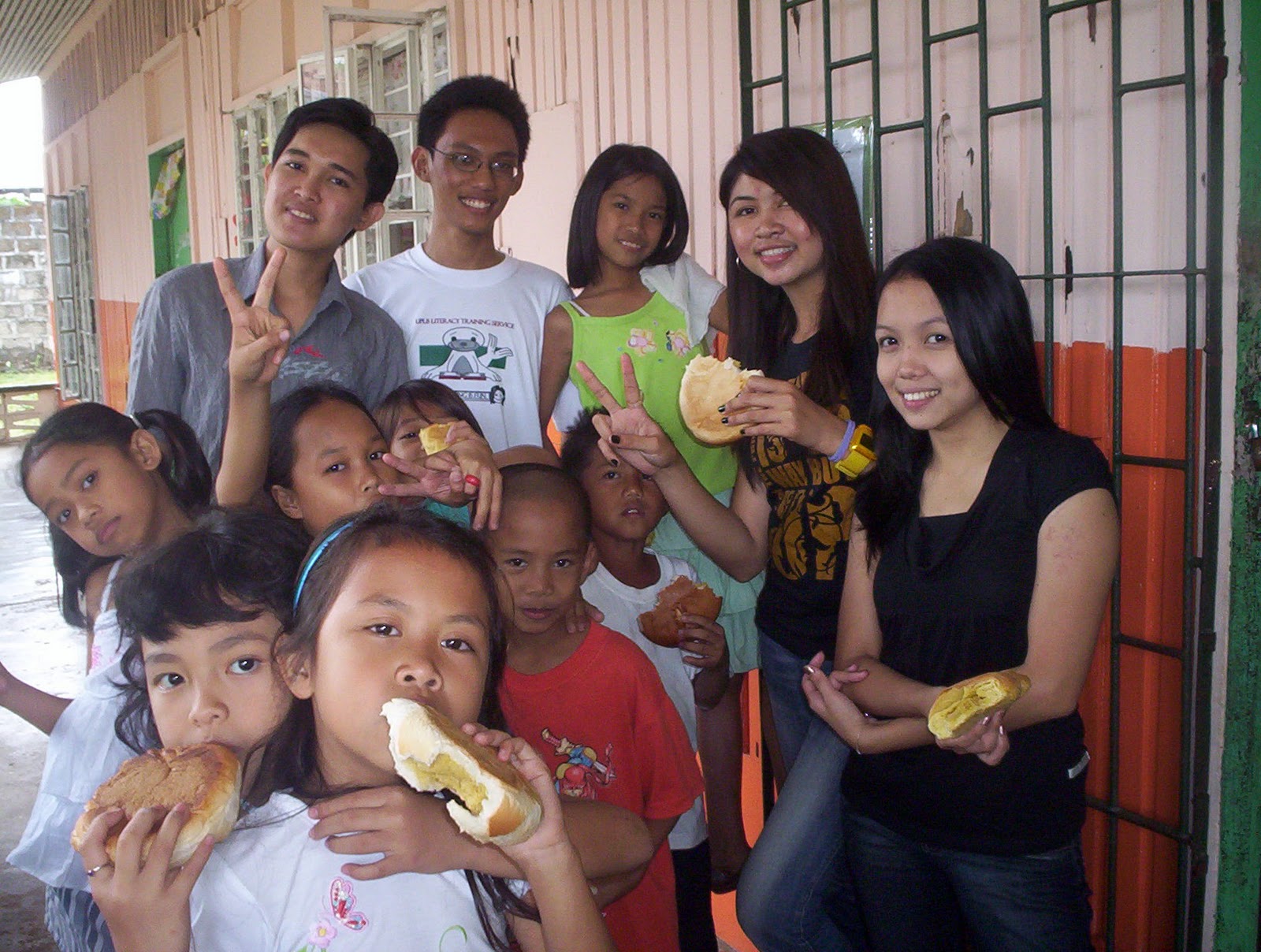
I enrolled myself in Literacy Training Service 2 on my last semester in 3rd year (2008-2009). It was in response to the required National Service Training Program units before I finish college. That experience made me realize the importance of including the said course in our curriculum. I got this archive from my folders when I was arranging my files. Hope you’ll end with some realizations or awareness of the true situation of the primary education in the Philippines.


                    My first encounter with the Sta. Isabel Elementary School revolved around three points: the room where the class is being held and will be held unfortunately throughout the semester, my students of different backgrounds and characters, and the teacher who appeared to be so idle (that’s I guess the way I can describe her). First to deal with, though I am used to see old rooms and facilities in institutions like that, I was still surprised by the condition of the room. I used to wonder then how will our voices be heard well in the said room with outworn walls which are incapable of confining sounds. Luckily, I was still able to find some facilities like fans working well and the comfort room which is I believe an important portion too. With regards to the students, I may appear prejudicial but I do believe that they are truly friendly and approachable. Most of them as I have observed form groups and I think it might be because they really knew one another and that it is really the nature of kids. Boys form their own groups as well as the girls. Concerning my encounter with the teacher, meeting her, honestly, made me feel secured from the fact that the students are definitely dealing with a very good mentor during the course. The manner in which she delivered her ideas, experiences and perceptions was really convincing (at least that moment I asked her about the conditions of the students). The gestures she made contributed big points as she imparted every little thing she knew making her in the end (of our short conversation) very efficient in conveying her insights on the characters and performances of her students (academically and on behavioural aspect).

                    The students like any other kids of their age are very playful. Every time we facilitators allow them to take a break, they always proceed to the school yard and play vigorous games. Luksong baka I think was the game the boys used to play and which scared the hell out of me. During their recess, we facilitators still used to guide and watch them play and find their activity not safe for them. I have never been like that when I was still a kid, but no regrets because I chose not to. Anyway, I used to watch the girls too. It appeared that they tend to compete with the boys’ energy and activeness by playing similar games within their group. They were indeed very energetic. It’s as if that will be the last game of their lives. Oftentimes, they shout at each other, say bad words I didn’t expect those kids can utter. I wasn’t surprised yet knowing that those students have different backgrounds.

                    At first I appeared in front of the students as if I was just forced to do some “outreach” works in turn to pass the course but I realized then how important it is to attend to the needs of those students. Hard as it may seem and benefits from our works might be vague, the internal satisfaction of helping children understand things (academic matters) better is what I had learned to develop along the way. I also realized that it a part of returning what the Lord had given me, something that I can give in return to the kindness and the blessings our Lord showed, gave and made me feel.

                    I remember then the times where I used to wake up early in the morning to prepare for their class, to plan how the activity will be interesting and how can I make their day fruitful and worthwhile. That was indeed a worthwhile sacrifice. Honestly, it wasn’t easy to travel for about an hour to stay and teach the students, students I don’t even know after all, students I’m not familiar with. It had been a sacrifice both for our time and the money we spent for the trips’ fare, a sacrifice I realized that was very sensible.

                    I now understand the essence of life and the significance and purpose of my existence better than the way I have used to perceive it. I learned that I am not living in this world, that I am not here to be served but to serve my fellows. I realized that our country badly needs volunteers to conduct free services in teaching, livelihood and outreach programs and the like. We, who are able to acquire and enjoy lots of privileges, should give back in return the blessings, the luck and good opportunities we received and continuously receiving.

                    We can’t live alone and that’s a fact we should live with. Many of us want an ideal community but how can we reach that dream if we, who are capable of making changes in the society will not take the first step, show some initiatives that we are concern with such. Dreams will remain dreams for as long as we are not doing anything, for as long as we depend with one another’s presence, nothing good will happen. Our country can’t wait and it badly needs kind-hearted Filipinos who do not only recognize the country’s needs but also take response and actions for it.

                    In the course of our lives, there will come a time when we are to deal with people of different culture, outlooks and perceptions of life. The bottom line of these things is that there are many things we need to explore and understand in this world and that our lives should not revolve only in our chosen fields for life’s lessons (as I have experienced during the literary service) are best learned through socialization, acquaintances, experiences and offerings. I offered my time, a commitment I will never forget, a bond with people I didn’t even know in the first place, to the Grade 3 students of Sta. Isabel whom I learned to love, everything was worth it.

                    I am 20 years old and I know my country depends on me. I promise to do then my responsibilities as its citizen. Many of us then tend to lag behind the ideas of life and sacrifice and so I will promise myself not to be like those people who after had reached and touched their goals in life will not look back anymore to where they had been before. I will not let my country down and so will I for my fellow Filipinos. To understand what our country underwent through in time would be the very first thing we should develop. What follows then would be our response to the needs it has silently proclaiming for years.

                    The nature of human beings goes like this; one will not do something innovative, something that will induce changes unless someone who is prominent will take initiative. We barely depend on orders and laws that we believe can respond to the needs of our country but how long will it take for a proposal to be accepted, for an idea to be relatively put into an effective action? We need to resign ourselves and get submitted to the needs of Filipinos. After all, who can help our fellows but only we who have been taught of what can sacrifice and offerings do.

                    The magnitude of offering does not dwell only in physical manifestations. It can be thoroughly observed in the changes we can induce to the people we used to mingle and helped go along with their lives. The idea that we can lend a hand for them gives them hope and faith in their capabilities, to what an ordinary individual can do for the betterment of his surroundings, of himself. We are in this world to co-create with God by extending, by spreading His love for us. Life spent for any other purpose is meaningless. We must abandon a thought system based on fears that we are to do for our fellows will not do anything good to us for the joy it brings definitely boundless, implying the magnitude of its power that is on the hearts and minds of the people we can help. It is a way of leaving a good mark in this world full of doubts, fears and hopelessness. Let us bring hope, love and care by offering ourselves to the Filipinos, to the Philippines who badly need our assistance, who definitely after our sacrifices, who really need our attention, to build a strong sense of being a unified country that by all means will help one another achieve the goals of a wonderful and meaningful life. Let us take the first step towards the success of non-evanescent outcomes of our sacrifices and unveil the world with love for one another. Our life will be meaningless unless we take part of and touch the lives of other people. By affirming that we love our fellow Filipinos in every situation, we actualize then the power of sacrifice and offering. Let us make people feel love in their lives even though the world has become a rather loveless place.


John Mark Katindig Torres

Saturday, May 15, 2010

Ethical vs. Practical: The Case of Biotechnology

                  Safety must come first. Ironically, the biotechnology industry has done and is doing an excellent job in this respect, yet the thought of manipulating the very hereditary substance of plants and animals - our food - is hard to be accepted by traditionalists. While scientists deem genetically modified food safe, the public, particularly in Europe, will not eat it. Many consumer advocates and environmentalists are convinced that this wide production of GMO should be stopped.

                  There are supporters and opposers of this developing field of science. Ethical and practical concerns therefore should be considered. Caught by our grown up traditions and as dictated by the society, many of us tend to lag behind the progressing ideas of life and science.

                  Biotechnology as an application of biological knowledge can help improve industrial processes and food production. As a subset of genetic engineering it employs isolation of desirable genes from other organisms. These genes are then manipulated and incorporated to target products. Basically, genetically modified organisms (GMO) are organisms whose genetic material has been altered to come up with relatively more beneficial products. This is in response to increasing demands of people in time that should be satisfied.

                  Advocates of genetic engineering believe that advances being made with regards to GM foods offer a way to quickly improve crop characteristics such as yield, pest resistance, or herbicide tolerance often to a degree not possible to traditional methods. In turn, it can increase food security for growing populations and in poor countries which rely on crops as main staple of their diet.

                  A lot of worries on this concern also arise pertaining to fears that it is ethically unacceptable to interfere with nature and that it is against the very essence of humanity. Opposers also believe that there are potential negative impacts in biotechnology when in fact nothing has been proven.

                  Come to think of it. People tend to look and find faults whenever something new is discovered. Biotechnology has a lot to offer in medicine, agricultural and food industries. Isn’t time for us to move out of our bins and support biotechnology?

                  From the works of it, it does seem that the potential for biotechnology is boundless, thereby implying magnitude of power that’s in the hands of its advocates and practitioners. This is why it is faced with a range of controversies about its possible negative effects but scientists working in Biotechnology are not blind to these apprehensions.

                  Genetic engineering requires great precision. A large part of science involves learning how to make things better. Do we stop all scientific research because learning how to make things better also teaches us what makes them worse? God gave us intellect and it depends on us on how to use it. Biotechnology stands to give us better and brighter future. There’s nothing wrong in availing and accepting its wonderful products. Risks notwithstanding, biotechnology has more benefits to offer to humankind and it is time to support this field of science.


John Mark Katindig Torres

Wednesday, May 5, 2010

Reproductive Health Bill

                    Science and technology never exist in a vacuum. Inexplicably rational, they together even unfold in a definite context. However, envisioning all-encompassing factors, issues and proposals relatively raised by studies of science and technology are oftentimes are led off track. Because of this, we find ourselves caught in a nonetheless our own unsubstantial view of things. While we remain holding onto our beliefs, those we have grown up with, we tend to neglect the potential noteworthy positive effects of our discoveries regarded as those that can alleviate the society’s condition in general.

                    I’m here before you neither to encourage you nor to influence you the other way around regarding the concern of our group. Anyway, after all, at the end of the day, it depends on each one of us, among the factors raised, which one would sufficiently comply with our needs.

                    Generally, to weigh things in equity, here are the concerns of the RH Bill:

(1) Information and access to natural and modern family planning

(2) Maternal, infant and child health and nutrition

(3) Promotion of breast feeding

(4) Prevention of abortion and management of post-abortion complications

(5) Adolescent and youth health

(6) Prevention and management of Reproductive tract infections, HIV/AIDS and STDs

(7) Elimination of violence against women

(8) Counseling on sexuality and sexual and reproductive health

(9) Treatment of breast and Reproductive tract cancers

(10) Male involvement and participation in RH;

(11) Prevention and treatment of infertility and

(12) RH education for the youth.
                    Disregarding any selfish concerns that might be prevailing among the proponents of the bill, as rational beings, we all know that this would not arise if we sufficiently are equipped with necessary tools to progress as a society. Population is not a burden and it will never be as long as (in a conditioned premise) the society can undergo sustainable development concerning the environment, maintain resources and preserve the instilled culture and tradition the society is born with. There’s actually no need to interfere with the natural process of reproduction, but as it remains inevitably a great concern for the whole society’s capability of pronouncing its needs, there arises the need to partake the very essence of humanistic method of abreast of the setbacks related to it.

                    While this kind of bill is proposed, a number of different social issues and concerns also merit a careful consideration. For an instance, one may inquire up to what extent will the domination of researches and developments impede or promote the civilian concerns and to the whole humanity at stake. How should the proposals be funded and organized and be maintained sustainably for the citizenry? And lastly, how can the society sit assured of the benefits they will enjoy while preserving their innate ideational, societal, personality and material perspectives as a whole? While these three questions may appear perplexing, it only suggests that to comply with causes and consequences of our schemes, it is a requisite to always mull over the potential constructive effects and underlying ethical conflicts it may pose.


Friday, April 30, 2010

Sustainable Development: Our Motives, Our Decisions, Our Actions


                    Originally, men and women lived in small, self-sufficient communities, dependent on things they found in their environment. If food, fuel, or materials ran out, they would simply move on. One of the first significant social and technological developments was the transition from this nomadic way of life to agricultural cultivation in settled communities, from which began societies as we know them today. However, as nations pursue their goals of achieving economic development, promote more intensive and advanced economic activity (through such means as education, improved tools and techniques), more available financing, better transportation facilities, and creation of new businesses, environmental impacts are oftentimes overlooked.

                    Environmentalists argue broadly in favor of sustainable development. By this they mean a pattern of living that favors the preservation of habitat, the conservation of non-renewable resources, and the increased use of renewable energy sources so that Earth’s ecosystems are not harmed beyond repair.

                    This guide of resource use that aims to satisfy human demands while preserving the environment in general for future concerns seems to be a challenge for both developing and developed countries. The idea is, while a nation searches to meet the needs of the present time, there should be no compromises for the ability of the future generations to meet the needs per se. The big point here is, while we in the contemporary times find our ways for survival, we should also take into consideration the security of our descendant’s subsistence. We, in search for the development and improvement of the pre-existing technical systems, should come about prolonged beneficial effects of our activities concerning the whole environment to which we and other entities belong. Along with other creations, we dwell and continue our endurance in this world interacting with each other, thus, we should continuously add more life to the Earth while enjoying the fruits it bears.

                    Sustainable development actually points out an economy in equilibrium with fundamental support systems, that is, by all means, economic activities concerned for national and international progress should comply with environmental concerns. Humanity indeed faces social and economic challenges; yet, it would not suffice to reason our negligence in our environmental-destructive activities. To present an alternative way of addressing a steady state economy should be one that addresses environmental concerns as well.

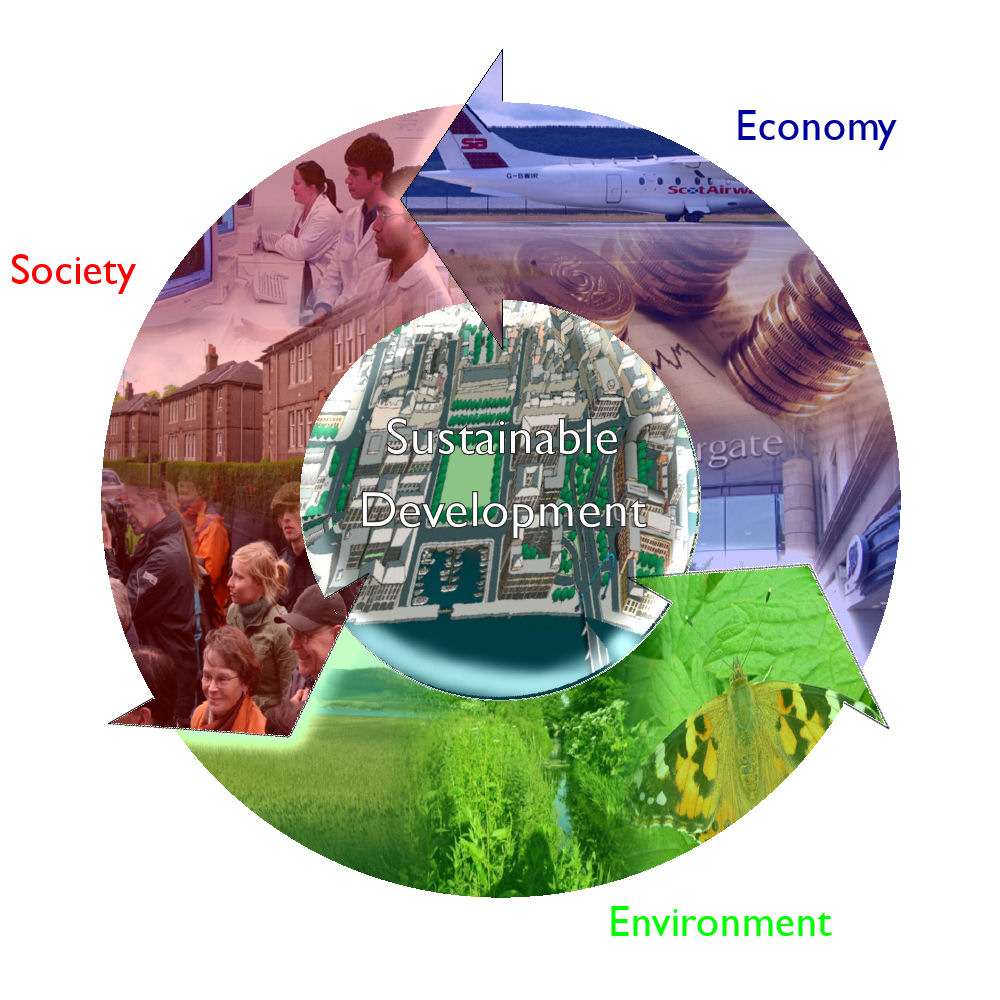
                    The field of sustainable development can be conceptually broken into three constituent parts: environmental sustainability, economic sustainability and socio-political sustainability.This contributed to the understanding that sustainable development encompasses a number of areas and highlights sustainability as the idea of environmental, economic and social progress and equity, all within the limits of the world’s natural resources are concerned. In the Philippine context, the great question would be, “How can we materialize this idea of sustainable development and bring it up into the mainstream?”

                    The problem seems to be that there is still no widely shared vision of what sustainable development might mean in real practice, despite many conferences and seminars held addressing this challenge. In many countries — rich and poor — this is often because of a perception that sustainability is expensive to implement and ultimately a brake on development. Poor countries for their part usually lack the physical infrastructure, ideas and human capacity to integrate sustainability into their development planning. Besides, they are often quite skeptical about rich countries’ real commitment to sustainable development and demand a more equitable sharing of environmental costs and responsibilities. Many people also believe that environmental problems can wait until developing countries are richer. With this kind of self-centered principles, we will always find ourselves caught in the very situation of disastrous fate as we proceed with our selfish motives against the whole world per se.

                    Whether we see the idea of ecological footprints in the course of our search for development or not, both sides would cause great impacts to ourselves, to our successors and to the whole world systems as a general rule. This is because everyone depends on nature and to everything it offers to provide us conditions for life security; however, our actions made unprecedented vicissitudes to the ecosystem and have weakened in time the nature’s ability to deliver more beneficiary provisions that can sustainably support the existence of all other life and non-life forms.

                    The above highlights the need to consider multiple angles and perspectives in the Philippine context. In pursuance of sustainable development, questions characterizing the worries of policy makers include who may participate, who may be affected, and who may benefit.

The Political Challenge

                    This issue revolves very evidently as a political framework in the Philippines. The involvement of local communities in environmental management was a prerequisite for sustainable development. The government actually plays a big role in policy making, giving the people the rights over the natural resources subjecting and drawing the Earth near its end. There could have been no problems with our utilization, however, for an instance, we burn gasoline, coals and other fossil fuels inefficiently for energy; we cut down trees for paper industries without even replacing it; we utilize meats incompetently; we intervened natural processes of our ecosystems; all actions invading, all destructive. We keep on exploiting the environment as if we don’t know what the outcomes will be. With this, better protection of natural assets will require coordinated efforts across all sections of governments, businesses, and international institutions. The productivity of ecosystems depends on policy choices on investment, trade, subsidy, taxation, and regulation, among others.

The Social Challenge

                    We are all in this together. While we refuse to learn the most basic lesson of attaining development alongside environmental preservation, we are actually obliterating the very idea of our role as rational beings. The changes that this world needs depend on us, in our willingness to manage and conserve the environment’s persistence. In the Philippines, all measures concerned to conserve natural resources are more likely to succeed if we as part of the local communities have our initiatives to start a change. It all starts from each one of us.

The Economic Challenge

                    Even in the advent of technological applications in industries and economic zones, three main sources of capital still play an evident role: the human-capital, knowledge-capital and resource-capital. The restoration and maintenance of the last factor seems to be the challenge for the economic sectors. Concerning this, policies dealing with the enhancement of the environment's carrying capacity to support the country's sustained economic growth, alleviating poverty in the process, need to be implemented. The great enterprise the economy may get from natural resources is a promising source of wealth; however, invariable conflicts may arise such as incompetent utilization of supplies and exploitation of the environment in general.

                    Sustainable development explicitly recognizes the interconnections and relationships between economy, society and the environment. In this world that seems to grow smaller, many issues must be considered at a global level. Environmental laws appeared to be undermined in time by self-centered individuals, groups and institutions. The best way to finance development is not something apparent to all of us, the idea of sustainable development. The mere fact that environmental conservation appears to be the main constrain for our development in all aspects should not be neglected. While we aim for economic efficiency, social status stability and future permanence and constancy, the Earth itself needs strengthened and rationalized movements for its continued persistence. The future is not somewhere we are going. While the humankind has the ability to obliterate, we can also act to sustain and preserve our planet in general.

References:

Adams, W.M. (2006). "The Future of Sustainability: Re-thinking Environment and Development in the Twenty-first Century." Report of the IUCN Renowned Thinkers Meeting, 29–31 January, 2006.

Living Beyond Our Means: Natural Assets and Human Well-being, An interpretation of the key messages to emerge from the assessment, from the Board of Directors governing the MA process, March 2005

Microsoft ® Encarta ® 2009. © 1993-2008 Microsoft Corporation. All rights reserved.

Roads to the Summit: LEAD International and Panos London. August 2002

Smith, Charles; Rees, Gareth (1998). Economic Development, 2nd edition. Basingstoke: Macmillan. ISBN 0333722280.

United Nations. 1987."Report of the World Commission on Environment and Development." General Assembly Resolution 42/187, 11 December 1987.

Warren Flint, R. 2009. Five E’s Unlimited: A System’s Approach to Sustainable Development. Seattle, WA 98108


Tuesday, April 27, 2010

On Technonolgical Advancement Disparities

       When I took STS 1 (Science, Technology and Society) subject during my last semester in college, I've recognized a lot of factors on why our country, in the field of science and technology, is incompetent as I may say so, with that of the first world ones. This is of course a big issue to deal with and there would definitely be underlying aspects to consider. Anyway, as far as I'm concerned, maybe, just maybe, everything roots to the following reality bites on technological disparities.

- Myriad Complex of Issues (multitude of factors, e.g. government funding, availability of resources, manpower, technical-know-hows, etc.)
- Strong Will in Pursuance of Technological Advancements (individual and organizational wills)
- Stringent Operational Implementation from Comprehensive Researches (laws and orders from the research agencies, institutes, academes, etc.)

         Countries who can afford to conduct and perform researches for further advancements bear the label of having supreme qualities for both products and services. They who have established their names in the global market as leading nations in the field of science can be attributed to the support from the government they receive and enjoy in time.
          Well, with great hopes, the Philippines will in time enjoy highly-defined technological advancements...

Saturday, April 10, 2010

Hero


Inspired by Efren Penaflorida's good works, I made this piece on a new perspective about a hero.


Hero. Is he a brave man, a conqueror, an idol for few, or an individual of great deeds? What makes a hero? What must one do to be regarded as a hero? Just few questions that bothered me that for long, I have been enjoying this freedom of speech, expression of one’s thoughts and opinions and a lot more privileges of a freeman, but never did it come to my mind, who were those individuals who might had offered their lives in pursuing such freedom. An attribute as I may say, “hero” is such a one word with scores of definition; of which one base on my perspectives is as follows.

Pondering on aforementioned questions, I ended up realizing that there might be no existing set of rules or criteria in identifying who among the historical figures will bear the label of being a hero. To some extent however, all of our fellowmen regarded as heroes possess some sterling qualities of which patriotism predominates all. They who had their contributions in the process of nation building and the induction of mind awakening events made people realize of the significance of liberty in any possible perspective we can think of. It has been an established idea to all of us that heroes are those who live in the very sense of nationalism, whose aspirations dwell mainly on struggling for freedom. If we are to contemplate on what a hero really means, there arise thus the need to mull over the idea that heroes are not just those who carry with them noble qualities. For me, people whom we encounter everyday can also be considered as heroes. They may not be distinguished for any courageous act or abilities nor admired for heroic deeds, but they who have been doing their jobs to the very best they can, without harming but rather offering best services to other people can also be regarded as a hero. To my concern, there are those people who stay in shadows, out of spotlights, and overlooked everyday but whose existence links the lives of other significant people.

For me, a hero is someone who makes impact to the lives of the people around him. Teachers, policemen, fire fighters, maintenance staffs, electricians, domestic workers and the like are, for me, my heroes. They can teach you to read or write, they can save you in various ways and indeed, they can really make a huge difference in your life. I adore them who fulfil every inch of their profession, every response to the need of the contemporary society. True heroes are the people that do not think about being a hero; they just do what is instinctive to them and then do not delight in the glory of their actions. They are all before our eyes; unappreciated and insignificant yet they play noteworthy roles to improve and extend our lives.


John Mark Katindig Torres

Monday, January 11, 2010

Comparative Analysis of Spoliarium and Mallarium: Significant artworks delved and shaped by the transitions in time

              An art, mediated by its own language and symbols, signifies and conveys ideas, feelings and concepts deeply within the work more than one can easily perceive. Shaped by the artists’ particular and unique approaches, a work of art may exhibit various definitions and interpretations. Dictated by an artist’s time, a work of art may wave and raise certain issues in society which may either be easily manifested or deeply concealed within the masterpiece.

              Critically, acclaimed Spoliarium, one of the Philippines’ finest and most prominent work of art, undeniably disclosed lots of issues and somehow raised awareness among Filipinos of his and today’s time. Some were not that directly shown and thus, a thorough understanding and analysis of Juan Luna’s time are highly recommended. Though, Spoliarium is not that obscure like other artworks of his time, the theme of its “moving story” depicts a relatively significant idea. To firmly grasp the idea Luna incorporated in his work, the elements involved in his masterpiece should be well understood.

              We, Filipinos tend to give meanings to our fellows’ works in the context of nationalism and attainment of freedom from submissiveness. This might be because we have been under many superpowers in the course of our development and progression as an independent nation. Evident in the Spoliarium what had therefore inspired Luna. Conceptualized and completed during Spanish colonial times, Spoliarium appeared to be a nearly apparent metaphor for the condition of the Philippines that time. The principal image is that of the Roman soldiers dragging the dead and dying gladiators across the ground towards a heap of bloody carnage. Symbolically, the latter mentioned character represents Filipinos under Spanish powers. Filipino gladiators were those insignificant Filipinos serving the Spaniards as slaves. The man wearing white robe is a Spaniard despoiling or stripping of the belongings and valuables of the dead and dying gladiators. This represents greedy Spaniards taking advantage of weak and dependent Filipinos. In the painting, the man is collecting gold bracelets likewise in the reality controlling Filipinos and their properties as well.

              Surrounding the principal image are characters exhibiting different emotions and effects on the painting’s theme. Next to the Spaniards pulling the gladiators are two old men who appeared as if they can no longer wait to get some “blood” from the prizefighters supported by their belief of its rejuvenating power. In our context, this portion represents the colonizers’ patience of waiting for their strong subjects’ death before an action of selfish purpose is initiated. At the rightmost portion are two old women desperately looking for the bodies of their loved ones, hoping that they can still find them. This shows how hard it really was during their time when victims’ bodies declared to be dead were no longer recovered. We, Filipinos, have developed this strong faith and hope that after all these inhumane events, there will be a light that will brighten up our outlooks and perceptions in life. That seed of firm hope strengthened our fellows during their time. The spectators represent the Spaniards who did nothing but to cheer for their bets, for their selfish and acquisitive desires to see and watch Filipinos suffer and die. A noticeable woman in green is also present with her back turned grieving over a loved one. She gives then the touch of Luna’s mother nation, Philippines.

              Going back to Luna’s time, it appeared that works should fit the taste of the superiors and should be in line with the standards of classical arts. In an aim not get disqualified, Luna made used of white (complexion) men in his masterpiece and cited a very prominent scenario in Spain and some parts of Europe.

              In brilliant but controlled coloration, a collaborative work Mallarium stirred up striking comparison with Luna’s Spoliarium as the latter’s digital transposition. It made use of Luna’s concept of figurative and compositional elements. It appeared then that this modern artwork served as means showing transformation of media from that of Luna’s to this age of digital technology.

              Both artworks exhibit the wonders the elements of art can offer. Diagonal lines which are dominant appeared to be associated with Luna’s objective of pointing out the direction of the principal image towards the carnage. Comparatively, the color of Spoliarium is relatively dark giving it a cold impression and appearance of heaviness. Bright colors used in Mallarium convey activeness and advancement (as in technology, as well).

              With regards to the texture, Spoliarium is somewhat rough in line with the classical antiquity in most of the paintings during that time. Mallarium, on the other hand, is fine and smooth as any inkjet products are. In terms of dimensionality, the original exhibits 3-dimensional appearance. Forms and figures were shaded and the contours of the subjects seemed to have been darkened. The Mallarium with its very vibrant designed objects appeared to be flat and 2-dimensional.

              Time, periods and state of affairs have something to do with the artists’ development. Transitions in time dictate and shape the ideas and concepts of an artist. Luna’s Spoliarium started and completed in the context of the reform movements lead by Filipino expatriates serve as a direct representation of the condition of the Philippines under the Spanish colonizing power. Mallarium on the other hand, obviously was influenced by the present mallgoing culture and frame of mind as suggested by its name. Gladiators are the main or principal images in Spoliarium as those also used to be the main means of entertainment during that time. The emotions incorporated can be felt intensively as heavy and full of fear. The whole holds a darkly mood where you have to search each of the objects in the painting to understand it. Figures and objects are not that apparent and conspicuous giving Luna’s work of timelessness.

              Contours in Mallarium’s figures and objects were based on those in Spoliarium. Following the context that persuaded it, subjects used were in line with the modern means of entertainment in the Philippines, something that has become a pop culture of the time. Modern era offers a lot more entertainment of varying emotions presented in this transposition. To mention some, Superman and disco party can be seen in the work. It is very clear that digital adjustments added more flavour and enhancement to this transposition.

              Generally, both works of art visualize their specific social commentaries using the elements of arts and design effectively. Both are trying to convey and arouse interest and involvement of the people to act upon an issue. For Luna’s time, it would be hard to act for what it is right due to a very complicated situation in the country but for our generation when no one is manipulating us, the righteous and ideal society should be imposed. As for any artwork, they deserve moments of discussions, debates and expositions so as to develop within us Filipinos critical thinking and the values and principles that had shaped and will shape our country.


John Mark Katindig Torres

Thursday, December 3, 2009

Living life for others...


There are just things we have to deal with one at a time, step by step in the course of our lives and this comprises my principle in life; that I am not living for myself alone but for my fellows as well. ADF have developed in me this drive of helping less fortunate children at least even in simple ways I can. Every day when I go to school, walking in lanes with children selling garlands and the like has been a regular scene to me and I just don’t feel good ‘bout it. It is just like I’m enjoying the goodness of this life, acquiring at least the necessary things to survive yet there are these children who can’t even fill their stomachs with foods. My resolution then was not to give them money but instead give them pieces of bread so that I will be very sure that they have eaten a simple meal at least. I promised myself that once I had a good job, something that can support me more than what I need, or even if that will not be the case, I will really give support to those children. They are one of my inspirations; sounds odd, but I know I can bring out something good from them and that can inspire other people who are blind about this reality in the society. I can’t imagine these children growing in the streets, without proper education, suffering from insensitivity of those people who can afford good life. To create an environment that will make this country the best place to live in for all of us, we in the foundation have been constantly looking at things in a different way in compliance with what the contemporary situations calls us to respond so.


John Mark Katindig Torres


Image used fr http://lonjaurigue.wordpress.com/tag/street-children/

Wednesday, October 14, 2009

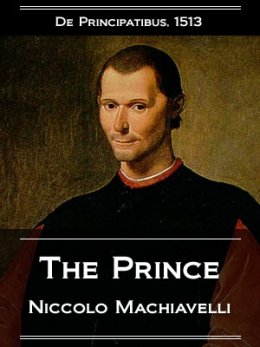
Ferdinand Marcos: A Comparative Analysis to Niccolo Machiavelli’s The Prince


Our inevitable quest of exploring and understanding the human nature led us to scores of discovery, each with their own significance and application. What has become the most immensely studied entity in the society when one deals with human nature is the idea of leadership. By this, one who wishes to become the leader makes use of various strategies to win the position and in turn, direct, organize and secure his constituents, the government and everything in the realm. Case studies have notably discussed and demonstrated why we people through time delved into the idea of leadership so as to secure our survival.

Political leaders from the earlier periods up to the contemporary times significantly in one way or another posed and established their own identities, positively or negatively affecting their subjects. Governed by their precepts in accordance to the norms accepted by the society or influenced by prominent ideologies, they lead respective subordinates and the whole the social order in turn to achieve progress. The late President Ferdinand Emmanuel Edralin Marcos, twice elected to the presidency before he declared martial law and seized dictatorial powers in 1972, contributed both promotional and ruinous impacts for the economy, the society, and the political institutions of Philippines.

Batas Militar, exposing each and every detail of Marcos’ reigning years, showed very profound manifestations of the political realism in a society by Niccolo Machiavelli. Exercising his sovereign power for almost twenty years, he has established the essence in practice of the so called prince according to Machiavelli. By all means, one can then deduce that what has governed Marcos’ authoritarian leadership during his term and what he has become too attested Machiavelli’s Political Realism. In this regard, politics are to be analyzed from the viewpoint of politics alone. To our concern, Marcos’ political activities classifying him as the local Machiavellian need to be examined purely the way it have been, limited by the political scope.
Ferdinand Marcos was born on 11th day of September, 1917 in Sarrat, Ilocos Norte. During the Second World War, he served as an officer in the Philippine armed forces, claiming afterwards that he had led a guerrilla unit, the Maharlikas, against the Japanese. Nevertheless, he has done a little or none at all to the anti-Japanese activities. He was elected as a representative for his province as a Liberal party candidate to the Philippine Parliament, considered as the youngest member of the House. After successive re-elections in the House, he shifted to the Senate, even achieving topmost of the votes in 1959. He switched his allegiance to the Nationalista Party after his nomination from the former party was not supported. Still, he won the presidency on 1965. Giving words of improving living conditions of most neglected Filipino groups and non-gentries, he was the first president of the Philippines to win a second term.

Nevertheless, a number of domestic dilemma rose which included increasing crime rates, violence, student oppositions and relative social unrests prevailed in the country. There has been an active widespread recruitment among the urban and rural poor for the Communist Party of the Philippines and other movements against the current administration. The New People’s Army, a CPP military wing, has started massive conscriptions even among the youth. Reasons for his pursuance of constitutional convention thus became evident to not abolish the two-term limit for the presidency so as not to leave the position after 1973. As Machiavelli asserted, the ruler’s respective virtues do not lie on the ideal assets and qualities but are rather related to the acquisition of power and in turn preservation of it. This is basically the real world concept and practice in the political field, that emphasis are being given on what the rulers actually do and not what they should do ideally.

Rulers, as described by Machiavelli, should be well-equipped of the intricate and irrational art of politics. Likewise, Marcos established his own force and effective deceiving skills in his struggle for power. Niccolo Machiavelli, whose wirings in the statecraft have led his name to association with cunning and imprudence, is known for being a political philosopher, statesman and historian. His work, The Prince, unlike any other documents of his time, deals with the realistic accounts for the governance’s success. While the rest in the classical period suggested good and ideal qualities for a leader, he (Machiavelli), proposed and developed concepts the other way around. A well-organized and established government according to him should possess cunning, dishonesty and deception. His idea, however, is inapplicable to the present setting as it would definitely subject the leader to his downfall.

Marcos made use of several tactics to cover up his plunder of the national wealth and resources. As political upheavals arise, he utilized strategies like unprecedented violence and clever propaganda to weaken the oppositions. Throughout his term, legally administered or not, Marcos practiced the necessity for corruption so as to preserve his stay in the office. As Machiavelli have indicated in his writings, the leader must do anything to keep his colleagues and most especially, his subjects in general to remain faithful to him by imposing the need of the state for his leadership.To hasten the economic development and mostly, to establish good image to the country, President Marcos implemented a number of economic programs. This started the role of deception for from at this point on, he gazed in awe at the trust and loyalty that the people gave him just so he could take advantage of them in return. When the people realized other side of the leader, he proclaimed the Martial Law, to which in accord to the constitution should be a system of rules imposed to overcome insurgencies to some extent and resolve national disturbances. This, however, led to injustice, in which only his family, relatives and cronies were protected by the said law, who were revealed to have plundered the economy. To keep them in wealth and unassailable power , arbitrary arrest, detention, salvaging and torture were the standard scenes in his later stay in the presidency. By force and fraud indeed, he was able to keep the position in his cruel grip.

He, just like the prince, was able to sustain his authority by preparing sustained armies by his side, literally holding true for his allied forces locally and internationally (US). In this regard, the very aim was to uphold prosperity in the country so as to control as well political upheavals against him. Furthermore, he best personified the characteristic feature of rulers in history like “the fox and the lion”. All endorsed policies in the platform of the contending party against him were uncovered and all opposing powers were unfolded in his unsparing hands to signify the fox. Similar to a lion, he straightforwardly executed various shrewd tactics as mentioned above. Many people either died or were imprisoned for their opposition thus. He was definitely ruthless to his enemies, mastering crafty skills to protect his allies, families and identity. Claiming that the proclamation of the said law was the prelude for the establishment of “Bagong Lipunan”, his family have only practiced corruption with their undeniably lavish lifestyle. Being generous to his colleagues and supporters, the system of “crony capitalism” became evident as they controlled monopolies in industries and the like, breaking the real essence of democracy in the Philippines. He for example gave the authority in handling express ways to Rodolfo Cuenca, banana plantations to Antonio Floirendo, Toyota to Ricardo Silverio, tobacco and food corps. to his mother and San Miguel Corp. to Eduardo Cojuangco.

Lastly, in any society one can think of, subjects would always favour leaders who by all means follow the good norms and custom people prefer the most. As Machiavelli have mentioned in his works, a ruler must show to his subordinates the ideal or should we say, sterling qualities even if it does not reflect the ruler in reality. This is only to entice his subjects, make them believe of his pure or unadulterated goals for the country’s improvement. Marcos appeared to be like this in his stay even more evident when he temporarily disclosed the law when the Pope has arrived.
Indeed, Marcos was the prototype of the cunning political ruler portrayed in The Prince, a local Machiavellian of the Philippines. This subtle analysis, therefore, provides an examination of the levers of power available to absolute rulers, to better understand the political economy of authoritarianism, especially one that had turned the country in despotism.

References:

Background Material for the Online Lecture on “Machiavelli and the Rise of Political Realism”.
Batas Militar (Documentary Film).
Michael Curtis (ed), Great Political Theories vol.1 (New York: Avon Books, 1981). pp. 215-17,
219-32.
Microsoft ® Encarta ® 2009. © 1993-2008 Microsoft Corporation. All rights reserved.
"Niccolò Machiavelli". Catholic Encyclopedia. New York: Robert Appleton Company. 1913.
http://en.wikisource.org/wiki/Catholic_Encyclopedia_(1913)/B2_Machiavelli.
www.ourownvoice.com/bibliography/
.
http://www.blogger.com/www.wikipedia..

John Mark Katindig Torres
Powered by Blogger.